Tag: Social Media Strategy

  • Instagram content calendar for small businesses

    Instagram content calendar for small businesses

    Most small businesses don’t struggle with Instagram because they have nothing to say. They struggle because every morning starts with the same question: what do we post today? Some days the answer is a rushed festival greeting. Some days it is nothing at all. After a few weeks, the page goes quiet.

    An Instagram content calendar fixes this. It is a simple plan that shows what you will post, when and why. This guide shows you how to build one for a small business in India, with a template you can copy.
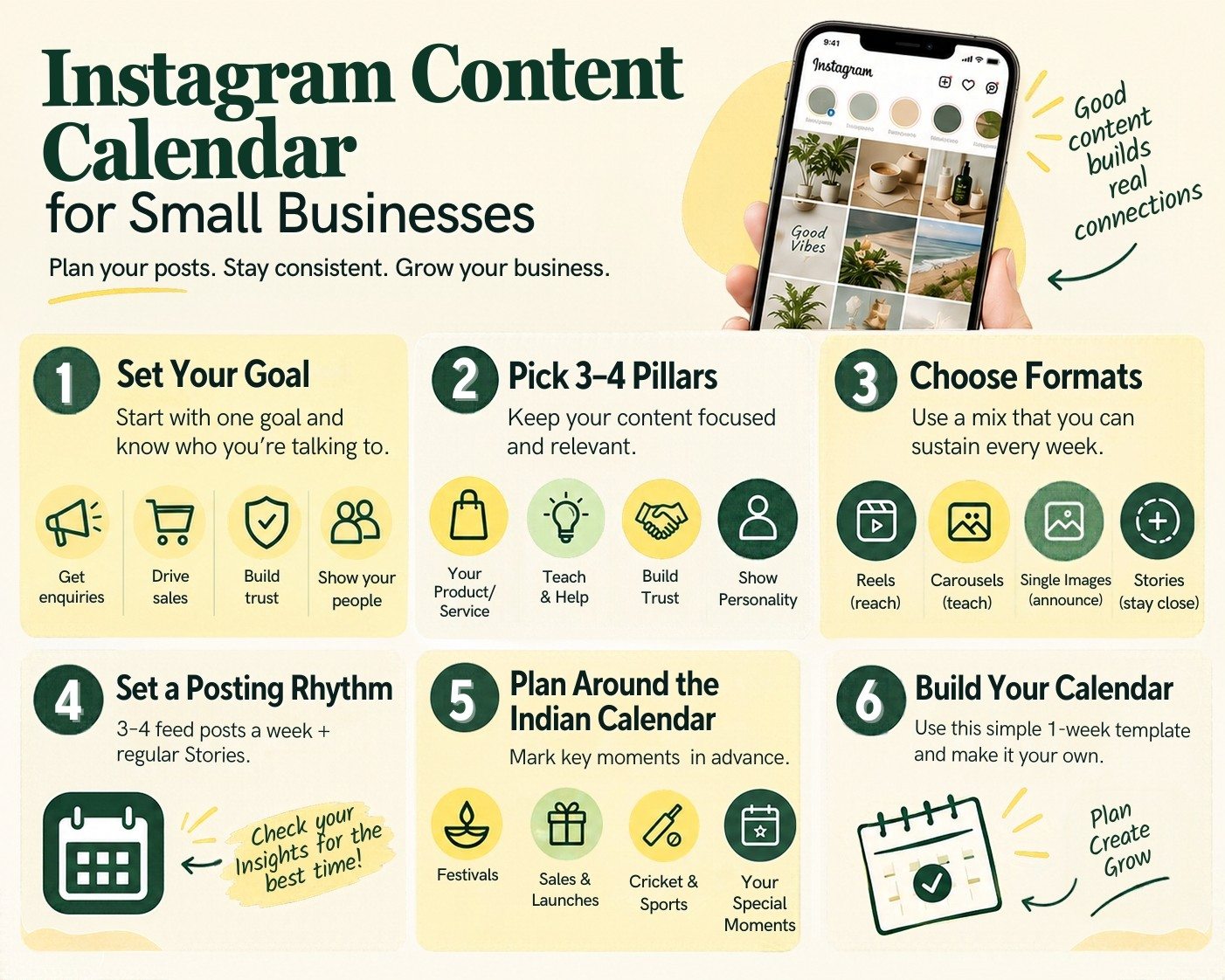
    Infographic showing the 8 steps to build an Instagram content calendar for a small business in India, from setting a goal to a monthly review

    Why a content calendar works

    A content calendar does three things for a small business:

    • It keeps you consistent. Regular posting matters more than occasional bursts of effort.
    • It removes daily stress. You decide once, instead of every morning.
    • It connects your posts to your goals. Every post has a purpose, so your page doesn’t turn into a random mix of images.

    Step 1: Decide what Instagram is for

    Start with one goal. It could be getting enquiries, selling a product, building trust, or showing the people behind the business. Also decide who you are talking to. A calendar built for young shoppers will look different from one built for business owners.

    Step 2: Choose 3 to 4 content pillars

    Content pillars are the main topics you post about again and again. For a small business, a simple mix works well:

    • Show your product or service: what you offer and how it works
    • Teach something useful: tips, how tos and answers to common questions
    • Build trust: customer stories, reviews and behind the scenes moments
    • Show personality: your team, your story and your values

    Every post should fit into one of these pillars. If it doesn’t, ask whether it needs to be posted at all.

    Step 3: Pick the formats you can sustain

    Instagram offers several formats, and each does a different job:

    • Reels: short videos that can reach people who don’t follow you yet
    • Carousels: swipeable posts that work well for tips, steps and comparisons
    • Single images: good for announcements, offers and product highlights
    • Stories: daily, casual updates that keep followers close

    Choose the mix you can actually produce every week. Two good Reels a week are better than five rushed ones you stop making.

    Step 4: Set a posting rhythm

    For most small businesses, three to four feed posts a week plus regular Stories is a realistic starting point. Check your Instagram Insights to see when your followers are most active, and schedule your posts around those times.

    Step 5: Plan around the Indian calendar

    Indian businesses have a calendar of moments that customers care about. Mark these in advance so you are not scrambling at the last minute:

    • Major festivals such as Diwali, Navratri, Ganesh Chaturthi, Holi, Raksha Bandhan, Eid and Christmas
    • Wedding and gifting seasons
    • Cricket seasons and big sporting events
    • Your own moments, such as sales, launches and anniversaries

    Plan these posts a few weeks ahead, and keep the rest of the calendar flexible.

    Step 6: Build your calendar

    Here is a simple one week template. Copy it, and swap the ideas for your own business.

    Day Format Pillar Example idea
    Monday Carousel Teach something useful 5 tips related to your product or service
    Tuesday Stories Build trust Behind the scenes of today’s work
    Wednesday Reel Show your product or service A 30 second demo of how it works
    Thursday Stories Teach something useful Question box or poll on a common customer doubt
    Friday Single image Build trust A customer review or testimonial
    Saturday Reel Show personality Meet the team or the story behind the business
    Sunday Rest and plan None Reply to comments and DMs, and plan next week

    Copy the same layout into a spreadsheet or a planner, and extend it to four weeks.

    Step 7: Batch your work and schedule it

    Set aside one block each week, or each month, to shoot photos and videos, write captions and schedule posts. Batching saves time and keeps the quality steady. Keep a running note of ideas from customer questions and daily work so you never start from a blank page.

    Step 8: Review every month

    At the end of each month, look at which posts brought the most saves, shares, DMs and enquiries. Do more of what worked and drop what didn’t. A calendar is not fixed. It improves each month.

    Common mistakes with Instagram calendars

    • Planning too much. A calendar you can’t keep is worse than a simple one you can.
    • Only posting offers. People get bored of constant selling.
    • Ignoring comments and DMs. Posting is half the work. Replies build relationships.
    • Copying trends that don’t fit. Not every trending sound or format suits your brand.
    • Never reviewing results. Without a monthly check, you repeat the same mistakes.

    How Sorta Famous helps

    Sorta Famous is a PR and marketing agency based in Andheri, Mumbai, that helps small businesses and brands build social media presence with a clear strategy behind it. We start with an audit of what you already have and what you want to achieve, then plan content that fits your brand and your calendar, not a generic template. Support can be project-based, with no long-term retainer, and you work directly with the strategists on your account.

    If you want a content plan built for your business, get in touch with Sorta Famous for a free 30-minute consult.

    Frequently asked questions

    How many times a week should a small business post on Instagram?

    Three to four feed posts a week plus regular Stories is a good starting point. Choose a pace you can keep for months.

    How far ahead should I plan my content calendar?

    Plan the next month in detail, and mark major festivals and sales a few months ahead.

    What should I post on Instagram for my small business?

    A mix of your products, useful tips, customer proof and glimpses of your team. Use the content pillars in this guide to keep the mix balanced.

    Should I use Reels or regular posts?

    Both. Reels help new people find you, while carousels and images help existing followers understand and trust you.

    What is the best time to post on Instagram in India?

    It depends on your audience. Check your Instagram Insights to see when your followers are most active, then post around those times.

    Do I need a tool to schedule my posts?

    Not necessarily. You can schedule posts within Instagram, or use a free planner or spreadsheet to track your calendar.
  • Social media strategy for founders in India

    Social media strategy for founders in India

    Most founders fall into one of two traps on social media. Either they post nothing because there is no time, or they post everything with no direction and wonder why nothing comes back. Neither is a strategy. A strategy is simply a set of clear choices: where you show up, what you say, how often, and what you want out of it.

    This guide breaks down a social media strategy for founders in India that you can actually follow while running a business.

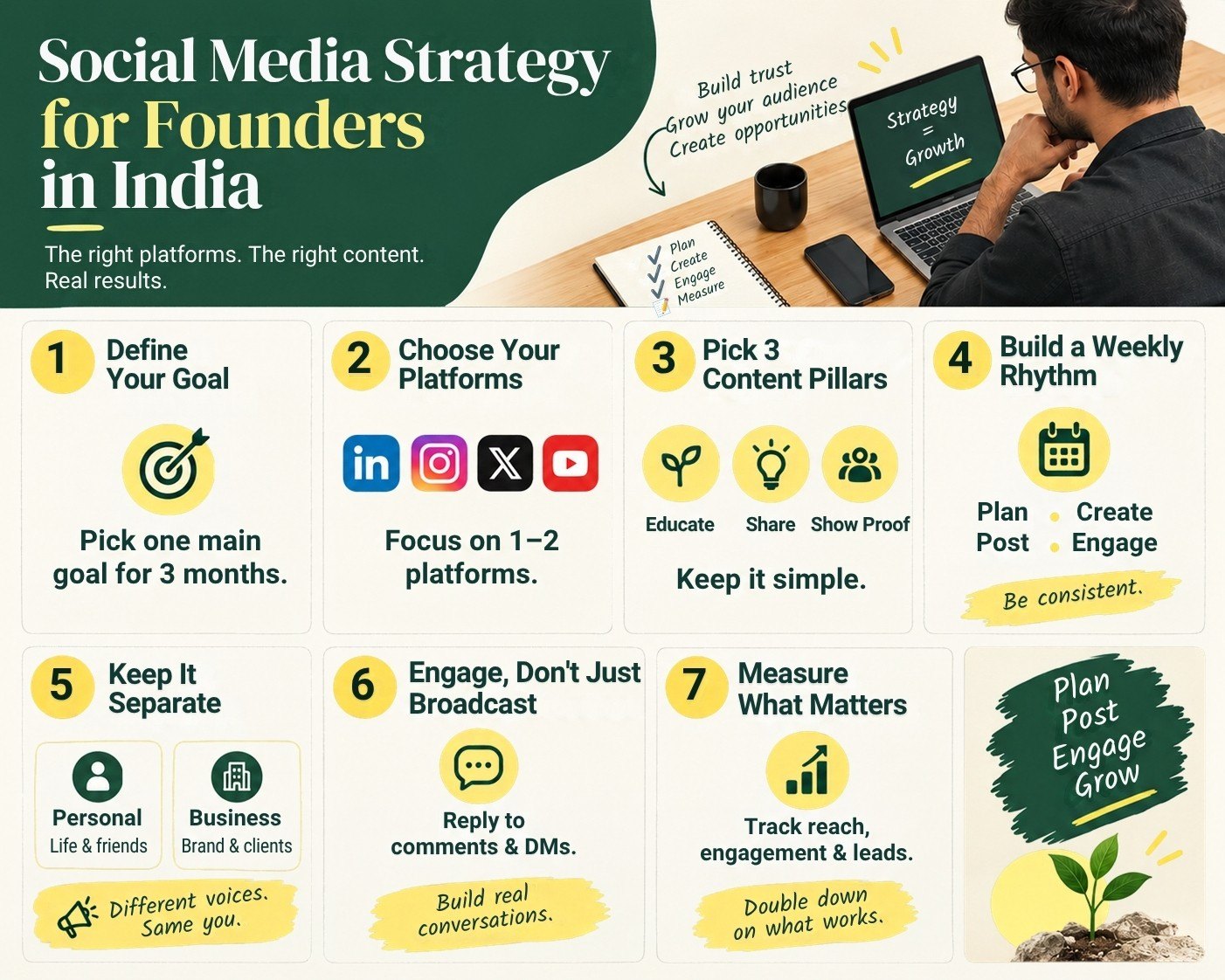
    Infographic showing the 7 steps of a social media strategy for founders in India, from setting a goal to measuring results

    Why founders need a social media strategy of their own

    People connect with people far more easily than they connect with logos. A founder who shares how they think, what they are building and what they have learned gives customers, investors and future hires a reason to trust the brand before they ever speak to anyone.

    That trust has real uses. It brings in enquiries, makes hiring easier, opens doors to journalists and helps investors feel they already know you. But it only works when it is planned. Random posting, however well meant, rarely builds anything.

    Step 1: Decide what you want social media to do for you

    Pick one main goal for the next three months. It could be:

    • Getting more customers or enquiries
    • Attracting good people to work with you
    • Building credibility with investors or partners
    • Getting noticed by journalists and industry events

    You can benefit from all of these over time, but your first goal decides what you post and where. A founder who wants B2B leads posts very differently from one who wants to sell a consumer product.

    Step 2: Choose one or two platforms, not five

    Trying to be everywhere is the fastest way to burn out. Match the platform to your goal and your audience:

    • LinkedIn: best for B2B, hiring, investors and professional credibility
    • Instagram: best for consumer brands, visual products and behind-the-scenes stories
    • X: useful for startup, tech and media communities that talk in real time
    • YouTube: strong for long-form explanations and building depth over time

    Start with one platform and do it well for at least three months before adding another.

    Step 3: Pick three content pillars

    Content pillars are the three topics you come back to again and again. They remove the daily “what do I post” problem. A simple set for founders:

    • The building story: decisions, mistakes, milestones and what you are learning
    • Your expertise: practical lessons from your industry that help your audience
    • Proof: customer stories, results and real moments from the business

    Mix these through the week so your profile feels useful and human, not only promotional.

    Step 4: Build a weekly rhythm you can keep

    Consistency beats intensity. Three good posts a week that you can sustain are better than a daily burst that stops after a month. A simple routine:

    • Set aside one block each week to plan and write the week’s posts
    • Keep a running note of ideas from meetings, customer calls and conversations
    • Batch your writing so posting never depends on your mood that day

    Step 5: Run your personal profile and company page differently

    Your personal profile and your company page do different jobs. The personal profile is where trust and conversation happen. The company page is the official home for announcements, hiring and proof. Make sure both tell the same story, but let the founder profile carry the voice.

    Step 6: Engage, don’t just broadcast

    Posting is half the work. Reply to every comment in the first few hours. Comment thoughtfully on posts by people in your industry. Reply to DMs even if the answer is short. Most of the opportunities that come from social media start in the comments and inbox, not in the post itself.

    Step 7: Measure what matters

    Likes feel good but they rarely pay the bills. Track the signals that connect to your goal: enquiries, DMs from the right people, profile visits, mentions from journalists, and applications for open roles. Review them once a month and double down on the content that brings them.

    Common mistakes founders make on social media

    • Being on every platform at once. Spread thin, nothing gets the attention it needs.
    • Only posting when there is good news. An audience that only hears announcements stops listening.
    • Sounding like a press release. People follow founders for their point of view, not for corporate language.
    • Ignoring comments and messages. It quietly tells people no one is really there.
    • Quitting too early. Most profiles need months of steady posting before results show up.
    • Copying someone else’s voice. What works for another founder rarely works unchanged for you.

    Infographic showing the 7 steps of a social media strategy for founders in India, from setting a goal to measuring results

    How Sorta Famous helps founders with social media

    Sorta Famous is a Mumbai-based PR and marketing agency that helps founders and brands build visibility that lasts. All of our engagements start with an in-depth audit of your current presence and goals, followed by a content and media strategy built around your calendar and not a generic content plan. We also give project-based support without a long-term retainer, for founders who need a focused push around a launch or milestone. And there are no account managers in between. You work directly with the strategists running your campaign.

    To start building a social media presence with a strategy behind it, get in touch with Sorta Famous for a free 30-minute consult.

    Frequently asked questions

    Which social media platform is best for founders in India?

    It depends on your goal. LinkedIn works best for B2B, hiring and investor credibility, while Instagram suits consumer brands and visual products. Start with one and add more only when the first one is running smoothly.

    How often should a founder post on social media?

    Three times a week is a realistic starting point for most founders. It is better to post at a pace you can keep for months than to go daily and stop.

    Should a founder post as themselves or as the company?

    Both, with different roles. The personal profile carries the voice and builds trust, while the company page handles official updates, hiring and proof.

    How long does it take for founder social media to show results?

    Usually a few months of steady posting. Early results often show up as better conversations and DMs before they show up as numbers.

    Do I need to show my face and share personal stories?

    Not necessarily. You can lead with your expertise and the story of the business. Share only what you are comfortable with, as long as the voice feels real.

    Can I hand over my social media to someone else?

    Yes, in part. A team can plan, draft and schedule content, but the ideas and opinions should come from you. The strongest founder profiles are built on the founder’s real point of view.